Every now and then, a writer happens upon an idea which is simultaneously both brilliant and obvious. Often, it’s the sheer obviousness of these discoveries that makes them so brilliant in the first place. Why couldn’t I have thought of that?, we ask ourselves, perplexed at our own lack of insight.
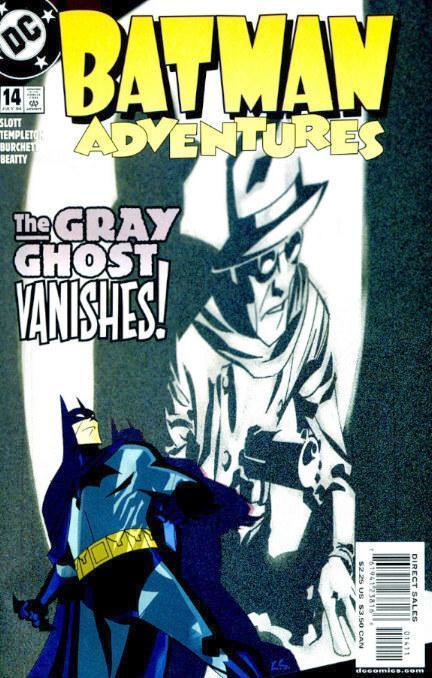
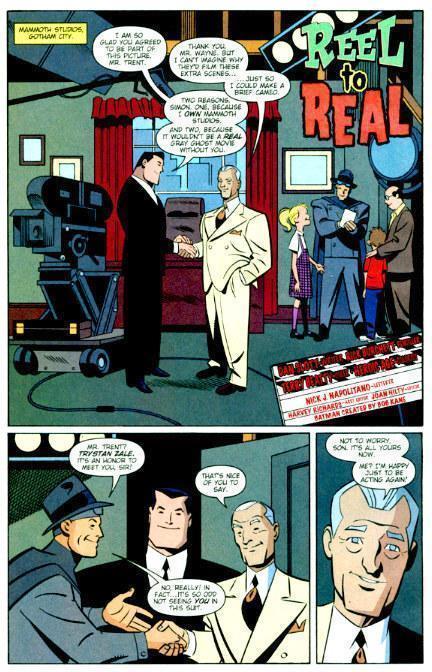
Dan Slott happens upon just such an idea in “Reel to
Real”, the main story in Batman Adventures #14.
Slott tells a simple tale exploring the thematic link between the Gray Ghost and Clayface, both stars of the cinema whose own lives have become inextricably intertwined with their on-screen exploits, one for better and one for worse. It’s a perfectly logical idea, of course. The Gray Ghost and Clayface have clear parallels, and Slott makes the most of them. In “Reel to Real”, the two actors (and
Batman, naturally) come into conflict when the Gray
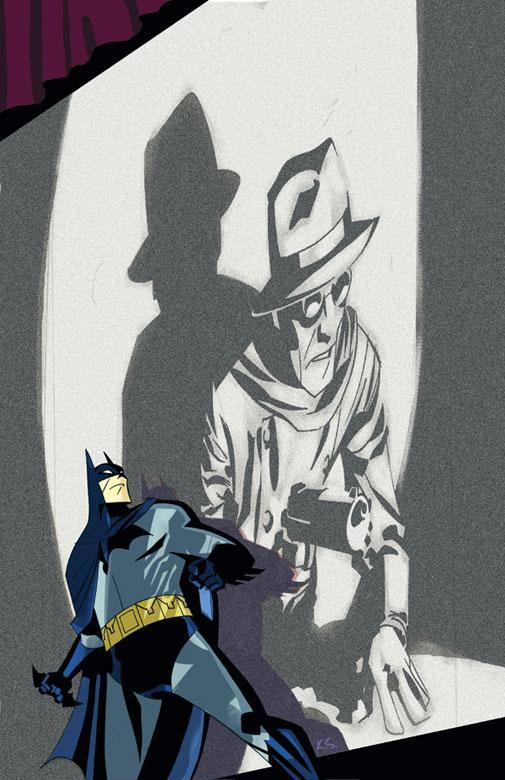
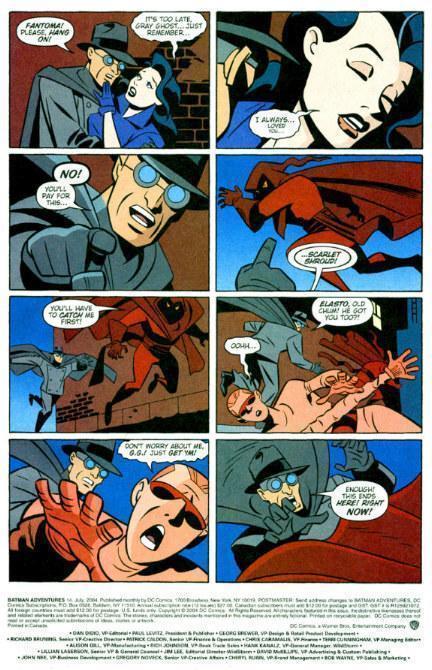
Ghost is kidnapped by Hagen, who wants to replace him in a forthcoming “Gray Ghost” remake movie. Clayface’s motivation, beyond merely his desire for a paycheck and additional fame, is surprisingly poetic. Slott makes clear how the similarities the men share add irony to their situation: both are actors perpetually stuck in the shadow of their old work, dominated by careers which ended years ago. Both have lives that parallel their most famous roles: Simon Trent eventually winds up donning the Gray Ghost costume to fight evil in real life, while Clayface is stuck perpetually reliving tragedies from the melodramas that made him famous. One man falls on the side of good, and one on the side of bad, but outside of that, they are surprisingly like one another.
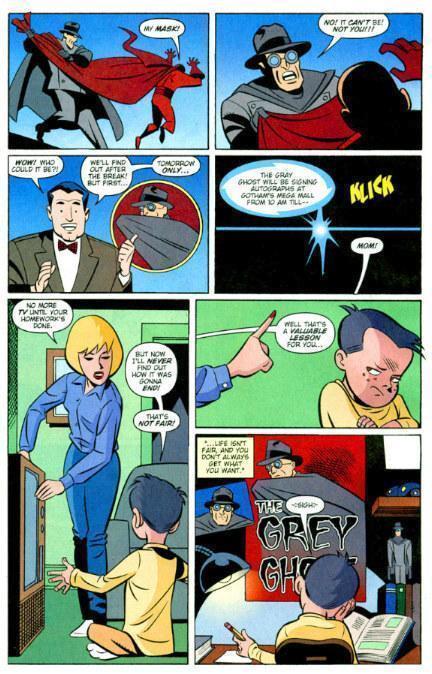
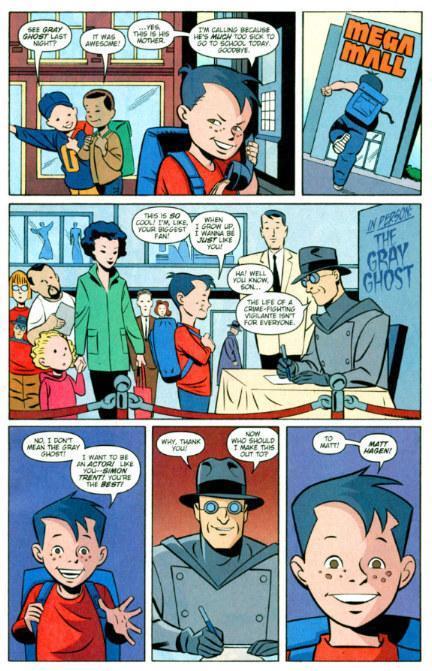
Slott extracts just as much mileage out of comparisons between Simon Trent’s influence on Batman and his influence on Clayface. The dichotomy he establishes in the opening pages (which includes a brilliant fake out) is an interesting twist upon the events of “Beware the
Gray Ghost”. Whereas Trent’s influence pushed Batman to heroism, and inspired a greater sense of idealism in the young Wayne, he has had the opposite effect on Hagen, eventually driving him towards egoism, arrogance, and ignorance. It’s a powerful parable about how different sources can interpret the same influence in fundamentally different ways. It speaks volumes about
Clayface’s fragile psyche and desperate need for validation from others. It also offers a pleasant glimpse into how Batman works: in the days following
“Beware the Gray Ghost”, he has quietly worked behind the scenes to help Simon improve his life. It’s nice to see that Batman can help those around him in ways that extend beyond merely punching the right people.
The backup further illustrates this dichotomy, as the
Gray Ghost’s influence helps Batman solve a crucial case, highlighting Batman’s continuing need for the Gray
Ghost’s inspiration and insight in his daily life. In a sense, it might remind longtime superhero fans of their own relationships with fictional characters, relationships that have hopefully pushed them to be better, nobler people.
As one can see, “Reel to Real” offers surprisingly deep insights into the nature of influence, of heroism, and of the effect that art can have on our everyday lives.
No small feat, and yet another feather in Slott and
Templeton’s cap.