In 2002, Jason Hall, Brad Rader, and Terry Austin quietly delivered one of the best Mr.
Freeze stories in years, Batman: Gotham Adventures
#51. The now-classic tale had Nora Fries, now revived, attempting to break her former husband out of Arkham.
All was not as it seemed, however, and the story, like all Mr. Freeze tales, ended in tragedy. Coming as it did in the middle of the largely forgettable Scott Peterson run on the title, Gotham
Adventures #51 was like manna from Heaven. There are certain things which, from a narrative perspective, the audience should never see. There are moments, and characters, that are more powerful when they go unseen.
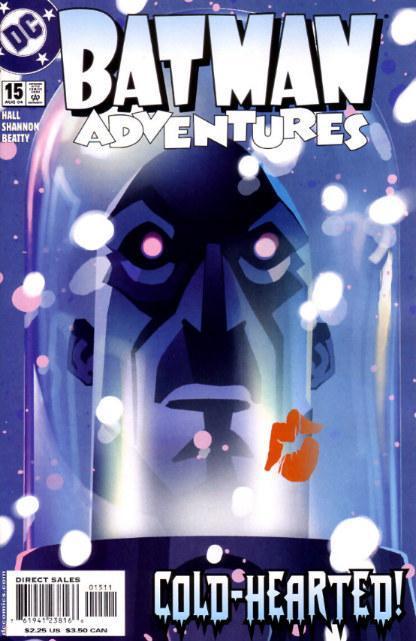
One could certainly make the case that Nora Fries is such a character, a person whose absence throughout BTAS only made her more mysterious and compelling. For that reason, it was a genuine gamble to bring Nora into the title, but one that paid off handsomely, giving us a resonant and deeply human issue. Understandably, fans were excited for Jason Hall’s return to the animated
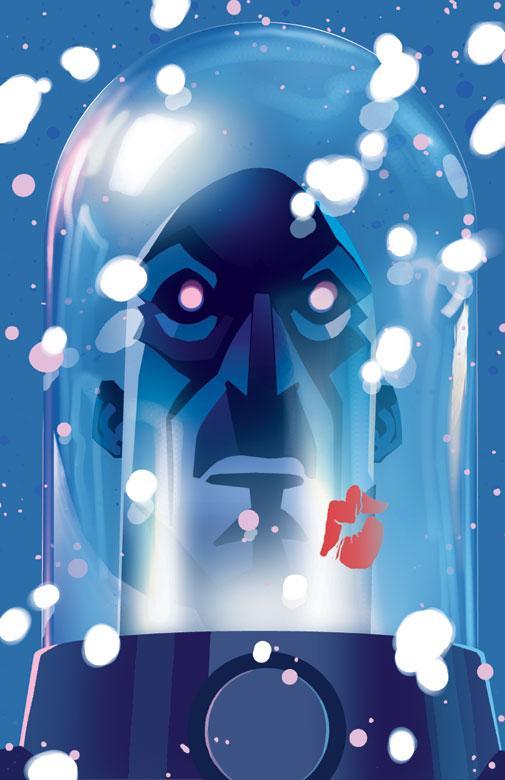
Batman titles, and Nora Fries, when it was announced he would pen the fill-in #15. Regrettably, the resulting story, though it has its moments, ranks as a disappointment when weighed against its predecessor.
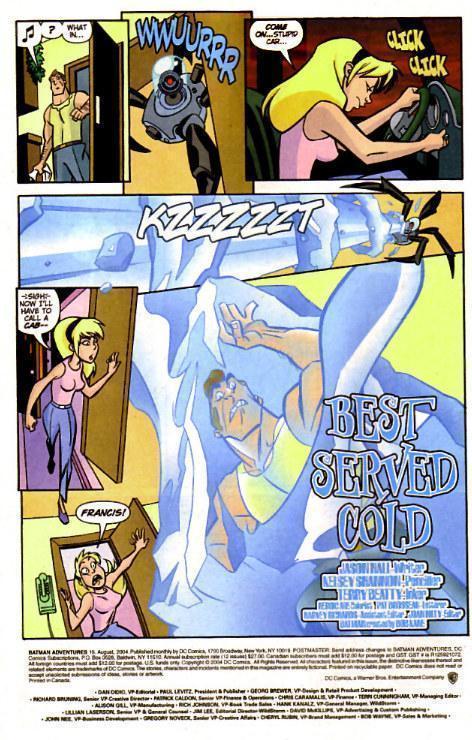
The issue picks up with an attempt, supposedly by
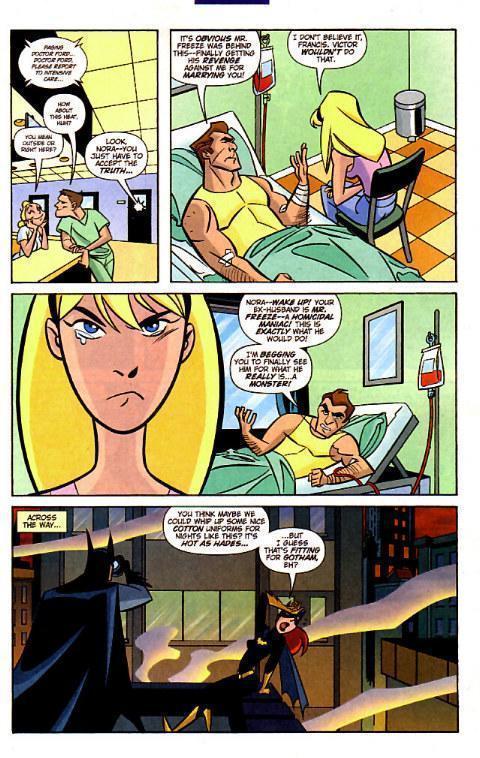
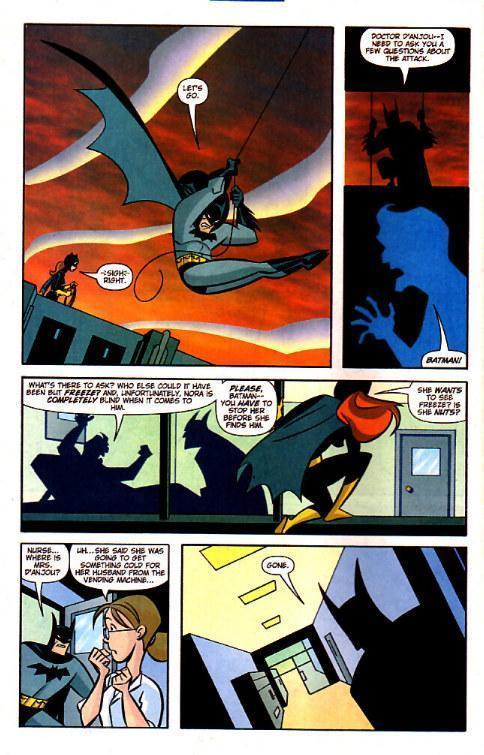
Freeze, on the life of Francis D’Anjou, Nora’s current husband. As Batman attempts to solve the crime, Freeze’s culpability comes into question. It wouldn’t be giving the story away to reveal that Freeze didn’t do it… and therein lay perhaps the issue’s central problem. Though he’s made few appearances in the animated DC titles,
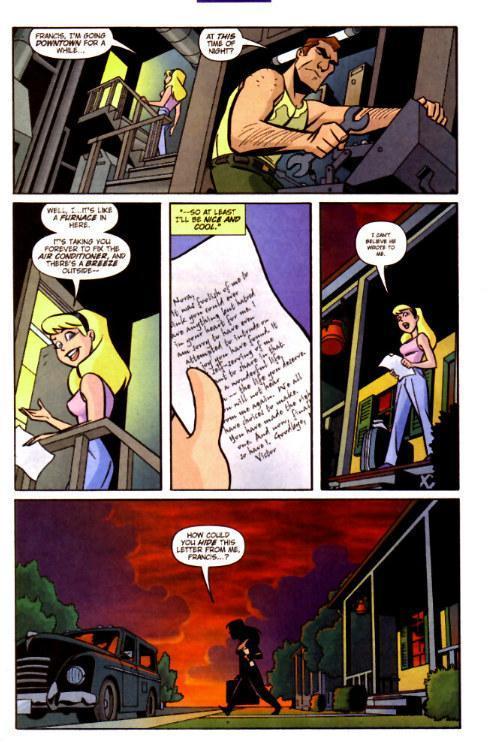
D’Anjou was previously portrayed as a completely rational and sympathetic character, and his actions in this issue don’t ring clear. There’s little justification for his sudden betrayal, and Jason Hall doesn’t succeed in selling the moment.
Hall does succeed wonderfully with his depiction of Nora
Fries. Longtime Spider-Man fans will note more than a little Gwen Stacy influence in her, and her place within the story is logical. Her interactions with Freeze are surprisingly fulfilling from a dramatic standpoint. But the tale is structured around D’Anjou’s choices, and it crumbles on the weak foundation of his motivations (or lack thereof). There’s also a good deal of “callous
Batman” in these pages, reminiscent of “Mudslide”. It’s hard to root for, or care about, the presence of the
Batman family in this story.
The art, for its part, is perfectly serviceable and well-crafted. The backup, a pseudo-origin story for
Koonak, the Eskimo boy seen in this issue and in
Sub-Zero, is largely unremarkable, though it does nicely shine some light on Freeze’s character. What we are essentially left with is an issue which falls short of lofty aims. Though powerful in some spots, the final story is regrettably uninsightful and inconsistent.
Though Freeze completists will want to seek this issue out, most Batman fans can skip it without missing too much.